Showing posts with label military. Show all posts

Thursday, 30 October 2008

The Dutch MPs

The Dutch MPs had been retained by the Japs in their functions for the time being and it was a clever move as it had relieved the Nips themselves of the responsibilities for keeping order in the town.  It speaks for itself that the European, and most probably also the native population appreciated the fact.  Ena and I were to become very friendly with the MP party which had been detailed to look after Dennenlust.  The NCO in charge was a certain Onder Lieutenant Kagee, a fine type of long service military man and we often wondered what became of him.  He was terribly broken up about the Dutch capitulation and told us that he simply could not take it in, that the Dutch Indian Army had ceased to exist.  It had been his whole life, poor chap.

The MPs used to patrol regularly and we never let them pass the house without calling them to come in and have a glass of beer, of which we still had a small stock.  It become the regular custom in the weeks that followed for them to drop in once or twice a day for a chat, a snack and a drink and we were only too glad to be able to do something for them as the rations they were receiving from the Japs were quite insufficient and they were always hungry.

Even in those early days the Japs gave evidence of the muddle headedness of their ways of doing things.  One day these MPs would be armed with revolvers and the next day another Jap would take way all fire arms from them, while on the third day still another Jap would insist on their being armed and issue revolvers and ammunition again.  We accepted this as being due to the general confusion to be expected at this particular time but it was proved indicative of the usual Japanese way of doing things and it will, I think, always remain a mystery to the Western mind how the Japs were able to  accomplish as much as they did.  In all our experience of them no reason or object could be traced in their methods and the proof, in my opinion, that their success was attributable to the mistakes and blunders of others and not to their own organising capabilities, it is to be found in the eventual, chaotic state of all territory which they occupied.  They showed themselves to be past masters in the art of ruining a country in an incredibly short space of time and the mess they made of Java in three and a half years baffles description.  One can only conclude that they realised from the beginning that they had no chance of achieving ultimate victory and therefore determined to do as much harm as they could in the shortest possible time.  It seems the only explanation.

***** to be continued

Wednesday, 29 October 2008

Return to 'Sunny Corner'

About 11 am Sunday, a Dutch MP on a motorcycle came to warn us that 'Sunny Corner' was empty and suggesting that we should return to Dennenlust immediately.  We needed no urging.  In record time, the Hillman was loaded up with the dogs, cats, birds, ourselves and sundry articles of baggage and off we set for home, the faithful Amat following on his bicycle.

Our progress up the  Dennenlust road was in the nature of a triumphal procession.  The news had spread and all the folks in the houses on each side of the road smiling and waving to us, from their verandahs, as we came up the hill.

As soon as we had unloaded the car I set out to Dagoweg 31e again to fetch some remaining items.  Coming down the Dagoweg not far from the imageBorromeus hospital a Dutch MP signaled to me to stop.  When I did so, he informed me that all cars had to be surrendered immediately and that I must get out and leave the Hillman standing at the roadside.

"Have a heart," I said.  "I've just got back my house after being evicted 6 days ago and am bringing my belongings back home," and suggested that he turn a blind eye to the telescope until I had made this one trip.  He was a decent and reasonable chap and agreed, but I had to promise him that I would deliver the car to the Jap authorities at the Technical High School in the Dagoweg the grounds of which were being used as a collecting centre, as soon as I had made the trip.

I got back to Dennenlust in due course with the second load but just as I was leaving again to hand in the Hillman as promised a terrific rainstorm started which continued all afternoon until after dark.  I had strapped my bicycle on to the car as I should have to cycle back, but in such a downpour with a very high wind, I would have been half drowned on the return journey.  I decide, therefore, to deliver the car to the depot early next morning, but when I arrived no Japs were to be seen, although the grounds were full of cars of all description.

The European porter who was still on duty told me that I could put the car there if I liked but I agreed with him that it would be foolish to do so with nobody there to receive it.  He informed me that he had heard that the Japs concerned were to be found in the Ursuline Convent up the road, so I decided to go there and hand over the car as arranged.  But the convent was also void of Japs, so not knowing what to do about the matter and also considering it unwise to continue using the car, I eventually ran it into a garage behind Ena's mother's house and there it remained for some months until the Japanese discovered it in one of their periodical searches and took it away.

'Sunny Corner' was in a bit of a mess after having been occupied by 40 Japanese soldiers for almost a week, but not nearly so bad as might have been expected.  Our carpets particularly had suffered as the Nips had walked over them with their muddy feet and a broad dirty track ran diagonally across the large Chinese carpets in the front room and dining room.  All the furniture had been pushed into corners to achieve sleeping accommodation on the floor and remains of meals and dirty plates were everywhere.  Our lovely little blue and white kitchen with its attractive 'Esse'-Fairy' cooker imagewas a sorry sight.  But actually there was nothing which could not be restored to its former state with time and a lot of elbow grease.

In every room we found bottles of wine and spirits, some empty, many a quarter to half full and a few still unopened.  Outside, at the back, were cases of empty soda water bottles which appeared to have been bought from Penang.  The Japs had certainly done themselves exceedingly well in the liquid refreshment line during their stay.  In fact my first revulsion of feeling at everything Japanese I threw the whole lot out of the house and I am still glad that I did.

The verandah was littered with the remains of what I took to be Japanese emergency rations in the form of some dried and compressed cereals which, with the rain, had swelled into a porridgy unsavoury looking mess.  In our bedroom, which seemed to have been occupied by the Jap officer I found that he had experimented with a few extra safety razors I had and had opened up quite a few packets of spare blades.  We made a clean sweep of everything that had been used by the Japs.

In spite of their having been at pains to impress us that they had kept our belongings intact, it was quite evident that they had literally been through everything although no great damage had been done.  An unused Kodasope 8mm film had been unwound and re-wound and put neatly back into its box, for instance, and traces of their monkey like activities came to light repeatedly during the next few weeks.

Things turned up in the most unexpected places.  One of Ena's bras appeared from her sewing basket.  In taking down a book from one of the bookshelves I got a toothbrush on my head.  Small articles, relegated long ago to the lumber room, were found in cupboards and drawers in the bedroom.  There was strong circumstantial evidence that my kilt and at least one of Ena's evening frocks had been tried on.

All our linen was missing and also one of the heavy curtains from the window in the sitting room, but apart from these items nothing seemed to have been taken.

We had found the Dutch Military Police guarding the house for us on our return and they were most helpful in assisting us to put the house to rights as far as moving back heavy furniture to former positions, etc was concerned and we were most grateful for their help.

***** to be continued

Tuesday, 28 October 2008

Proper decorum

It is a regrettable fact that many girls and women seemed to regard the arrival of the Japs in Bandoeng as a signal to display more openly that they had ever seemed to do, their feminine charms, by lavish make up and by going about the streets in attire which left little or nothing to the imagination. All too brief shorts were unfortunately only too common, for instance, and it is bitter to have to record that the Japanese themselves put a stop to this immodest behaviour on the part of the European fair sex. It was made known through the medium of the press that the Japanese authorities did not favour and would not countenance any but the most proper and conventional female attire, nor would the use of lipstick or other 'come hither' cosmetics be tolerated. There are rumours of girls who had ignored this order being publicly humiliated, by punishment but I do not know if this definite occurred.

Many shopkeepers, particularly those stocking watches, cameras and spectacles had a difficult time because they were besieged by Jap soldiers who would pay, and in 'banana' money, only a fraction of the marked price of the articles. Protest in many instances was met by a slap in the face. It is true, however, that if the shopkeeper was fortunate to get hold of an officer the latter saw to it that the soldier paid in full price, but in Jap money, of course. Generally, however, barefaced robbery of this nature was the order of the day.

On Saturday afternoon, Ena, who had more nerve and initiative than I have, suggested that we should cycle up to Dennenlust and see how 'Sunny Corner' as faring under Jap occupation. We set off and as we were pushing our cycles up the steep hill to the house, a truck loaded with Japs roared past us up the road. The Nips all grinned at us and some of them waved. I swore, thinking that they were jeering at the sight of the once proud Europeans reduced to trundling push bikes up a hill.

But I was wrong. When we reached 'Sunny Corner' we found that these were the very Nips occupying the house and that, having recognised us, they were merely giving us greeting. There must have been about forty of them altogether, and there seemed to be as many outside the house as inside. Their Lieutenant was not in evidence.

We were ushered into the house in the centre of this band which immediately surrounded. They were all very friendly, and one of them who knew about three words of English, was at great pains enthusiastically assisted by half a dozen others, to explain to us through the medium of his limited vocabulary and much sign language that they would be leaving the house the following Thursday. While this was going on, one Jap, stark naked walked quite unconcernedly through the room into the bedroom.

One of the Nips took me by the arm and indicated that I was to go with in the direction of the kitchen. I said quickly to Ena "Stick close to me, I don't want to leave you alone with these guys".

He led us straight to the bathroom, threw open the door and there was disclosed to our startled gaze another Japanese in the bath arrayed in his birthday suit.

Our guide kept jabbering a long story to us but of which we naturally could not understand one word. Despairing at last of this method of conveying his meaning to us, he grasped my hand and slipped it into the water in the bath. Then he took Ena's hand and repeated the action. The Jap in the bath calmly proceeded with his ablutions during this procedure, taking not the slightest notice of us.

At length it dawned on us what it was all about. Some months previously we had installed an 'Esse' cooker image (similar to an Aga) with complete hot water installation. The 'Esse' is a heat storage range which burns continuously day and night only requiring servicing twice a day, morning and evening, with a hopper full of charcoal. When we left the house I had been at pains to explain hastily as best as I could to the Lieutenant what he had to do to keep the stove going but he had quite obviously not got the idea. When the Japs arrived they had found hot water in the bathroom but they had let the fire go out and now the tap was running cold. This was what the Jap was now asking us to explain, but it just couldn't be done and eventually he and we had to give it up as a bad job.

Several Japs now took us on an inspection tour of the house and showed us how cupboards etc had been sealed by them with strips of paper and they were obviously anxious to impress the fact that, apart from shifting around the furniture to suit their convenience our belongings were intact and untouched. To this day we do not understand their solicitude in this connection as it is so at variance with all that we experience later.

When we left 'Sunny Corner' the whole crowd saw us off and, as far as we could make out, seemed to be inviting us to call again soon. Once down the hill and out of sight, Ena and I nearly fell off our bikes laughing at the memory the naked Japs in the bath!

**** to be continued

Friday, 24 October 2008

A little more about the Dutch capitulation in Java

I pause for a moment in my narrative to interpolate a word or two about the Dutch capitulation in Java.

For some reason or other it seemed to be generally expected that when the Jap chose to tackle Java, he would find himself up against a tough opposition. I cannot recall that there was the slightest concrete foundation for this idea, but can merely record that their view was the accepted one.

As I have already mentioned the abrupt and mysterious departure of Wavell and his staff caused many to wonder uneasily if Java was really such a touch nut to crack as had been imagined.

The Dutch Navy and Air Force did brilliant work out of all proportion to their actual strength and literally gave their all. There was not a ship and hardly a plane left when the Jap invasion occurred. Practically all planes had been at the behest of the Allied Command used in Malaya to bolster up the sadly deficient air strength there in a vain effort to patch up the swiftly crumbling defences of the Peninsula and very few, if any, returned from these operations.

Navy and Air Forces went out in a blaze of glory, one may say. The so far inexplicable and unexplained collapse of the Army is still shrouded in mystery. The Dutch Parliamentary Commission Van Poll, which visited Java in March this year (1946) states that an investigation in this connection is urgently desirable and as it is evident from this that even official circles are still in the dark as to the reasons for the ignominiously defeat of the Military Forces it would be ridiculous for me to even try to give an explanation.

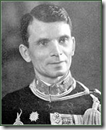
One thing must be considered, in my opinion, to have vitally weakened the Army as a fighting force and that was the tragic death of General Berenschot, the Commander in Chief who lost his life in a plane crash in Batavia. image Berenschot was recognised as a brilliant soldier and as C in C very popular with the troops. At the time of the crash it was broadly hinted in many quarters that there had been foul play, that the plane had been tampered with by enemy agents, but this can have been more rumour on the part of sensation loving news mongers.
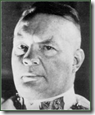
Berenschot's successor was the former Chief of Staff, General Poorten. image I know nothing of his military qualification, but the man in the street, like myself, can only naturally assume that the failure of the Army, when put to the test, was his responsibility in the first instance and that the collapse was due to his lack of vision and judgement.
The strength of the Army, numerically was I believe, somewhere in the region of 80,000 including native troops, but of this number only about half were professional soldiers. The number of Europeans was about 20,000, I understand. This means that 50% of the Army was made up of untrained men, those who had hastily mobilised from all peaceful walks of life at the outbreak of hostilities.

The Dutch had always had the conscript system which meant that at a certain age, those males who were deemed fit for military duty were called up and put through a course of training lasting, I understand, about 9 months and were then relegated to the Reserves and liable, like our Territorial Force, to be called up at once in the event of war. On reaching the age of 40, such men became automatically transferred to the Landstorm, which may be translated as Home Guard.

But when the Dutchmen in Java were called up, the great majority of them had this period of military training anything from 10 to 20 years behind them, and were probably not even capable of forming fours smartly let alone be expected to take any efficient part in modern methods of warfare. True, they were called up in rotation for shooting practice at the range for one day, and on that day expended 5 rounds of ammunition each at the butts, receiving their soldier's pay of about 20 cents for their trouble.

But even these facts, which could very reasonably be put forward as an explanation of the Army not having fought well, does not explain the complete and utter breakdown of every form of organised resistance.

There are tales of officers who just disappeared and of the failure of the Air Support Command to deliver supplies to the troops abandoned to their fate in Tjiater and elsewhere, but as this is all hearsay it is better not to enlarge on these matters. One instance I can mention from personal observation. It was on, I believe, the fourth day of the invasion that Ena and I were driving down the Lembangweg to town in pouring rain when we overtook four young lads, weary, bedraggled and mud stained. Their uniforms were sodden and they were actually walking barefoot. They had walked all the way from Tjiater some thirty kilometres distant and had been on the road for two days.

Their story was the same as that of one of the employees which I have already mentioned. No food, and nobody in authority to tell them what they were to do.

We crowded them all into the car and brought them in turn to their respective homes.

Granted, as the events would seem to indicate, that the Allied High Command had decreed that the defence of Java was impossible, it is still clear that a token resistance was imperative in the interests of future Dutch prestige and it is unthinkable that it could have been suggested that the Army should have laid down its arms with hardly a blow being struck in self defence, even if it should necessarily have resulted in severe losses. The Navy and Air Force did not hesitate to make their sacrifices and there seems no reason, looking at the matter quite dispassionately why the Army should have done less. An investigation in due course is definitely necessary and no one will welcome light on this obscure subject more than the Dutch in Java themselves.

**** to be continued